

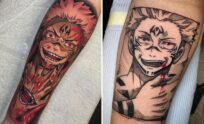
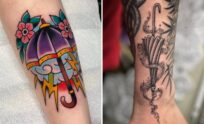

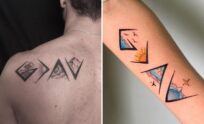
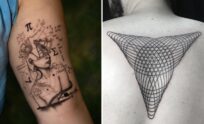
14+ Traditional Japanese Tattoo Ideas Worth Saving for Your Next Appointment

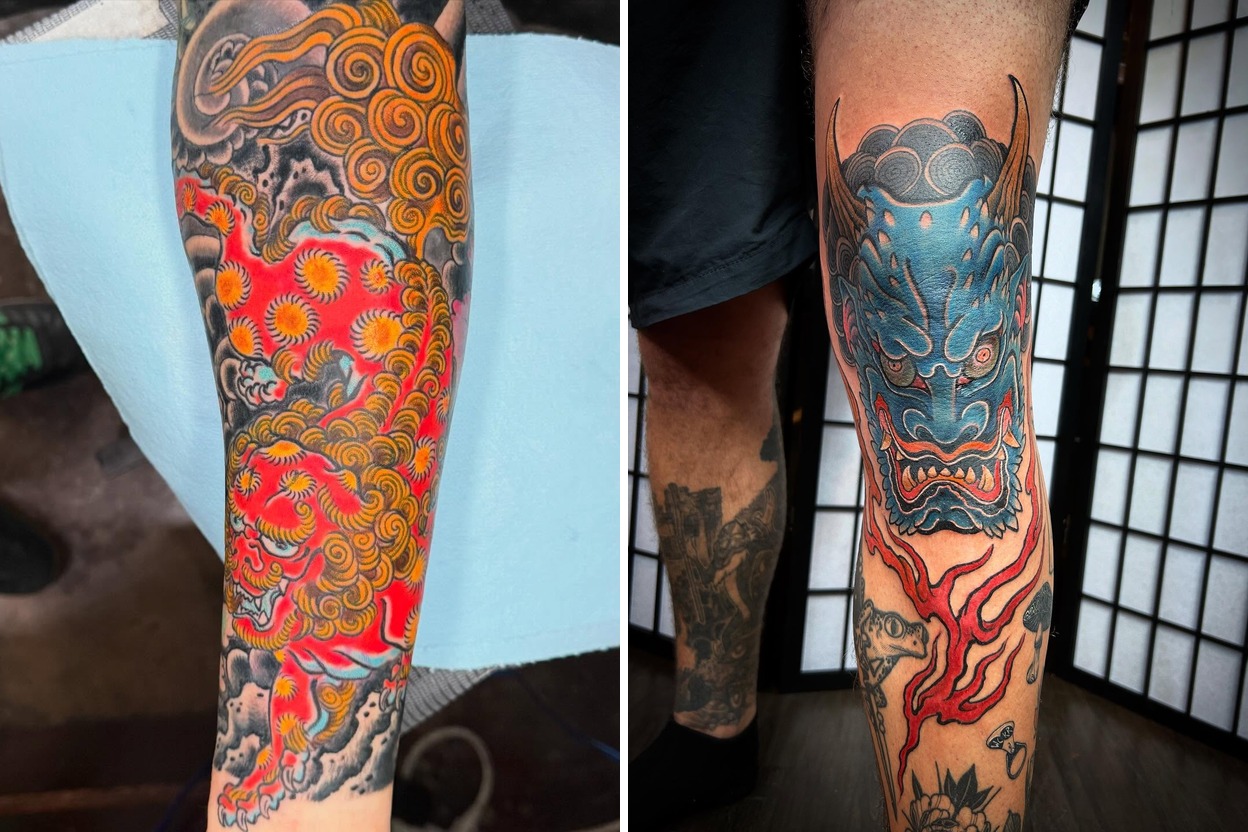
Red Karajishi and Spiral Cloud Traditional Japanese Tattoo
Whether you are planning your first ink or adding to an extensive collection, this curated lookbook features 14 distinct designs to inspire your next tattoo appointment.
1. Red Karajishi and Spiral Cloud Traditional Japanese Tattoo
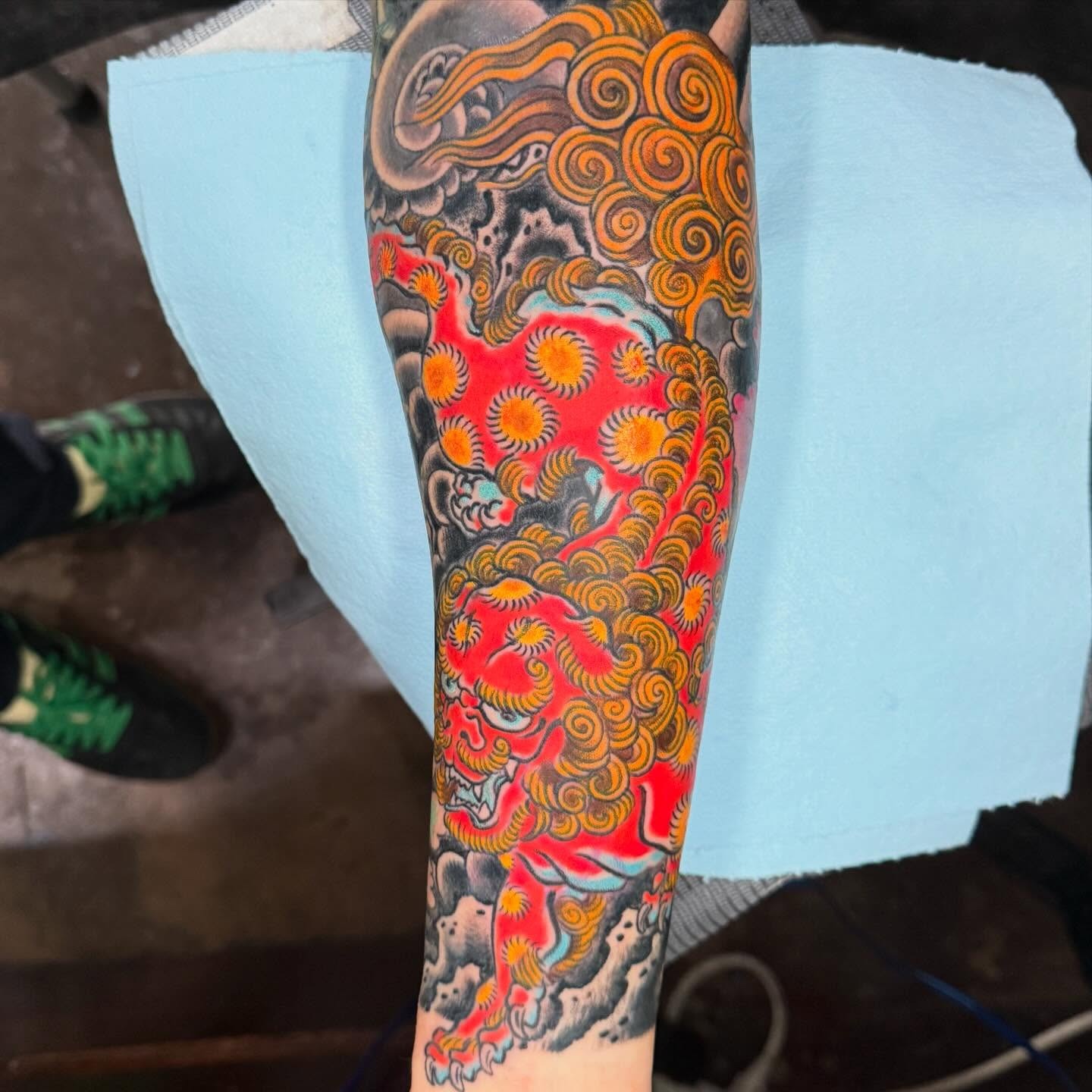
This traditional Japanese tattoo features a bold red karajishi, or guardian lion, moving through dense spiral clouds. The bright red body stands out against gray shading, while yellow accents add heat and energy across the piece.
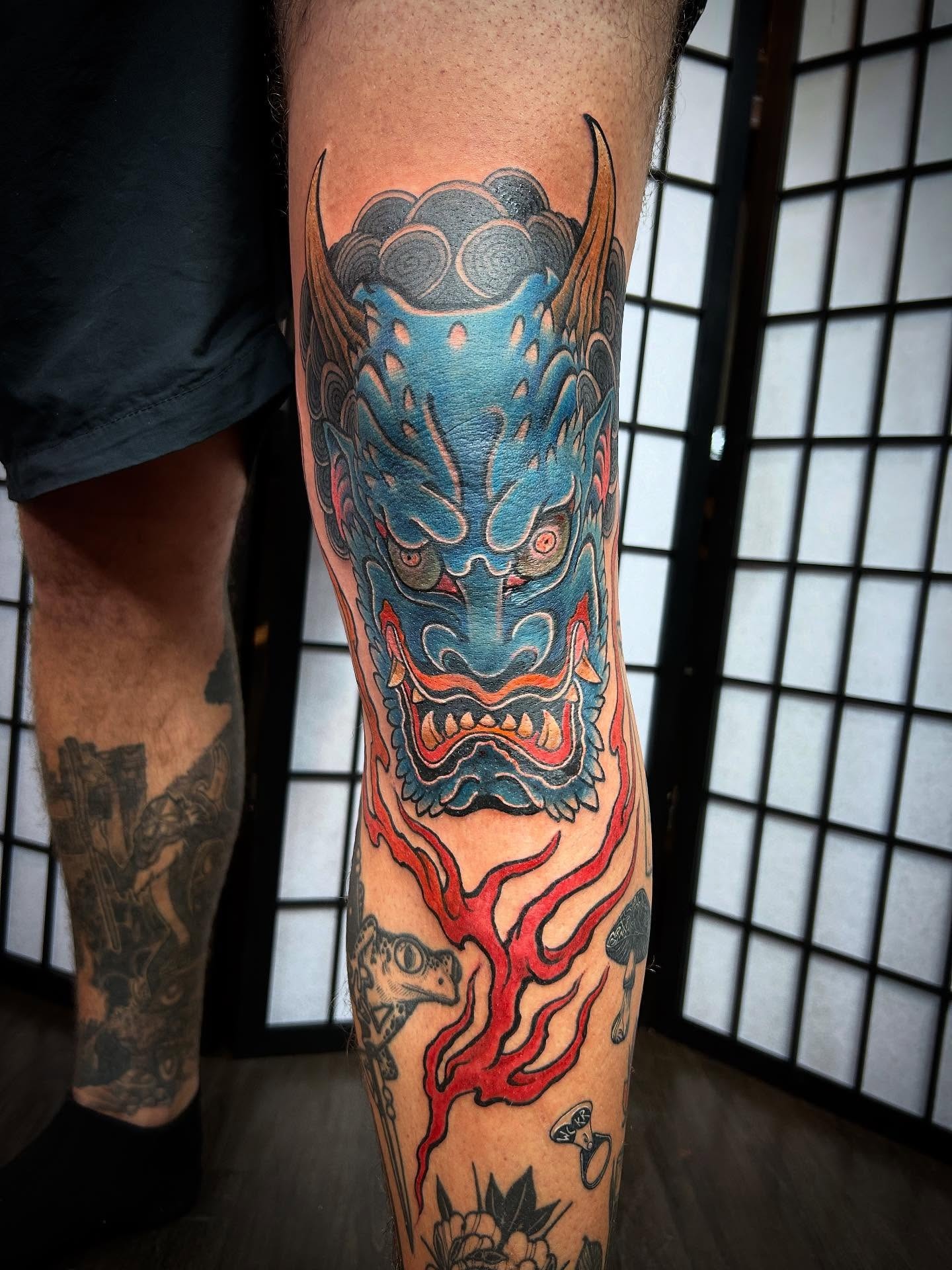
2. Blue Oni Mask and Flame Traditional Japanese Tattoo
Curled mane details, sharp claws, and open movement give the design a strong protective feel. The cloud background fills the lower leg well and keeps the composition connected. It suits someone who wants a powerful Japanese tattoo with color, motion, and classic mythological style.
3. Dragon Skull and Flames Traditional Japanese Tattoo
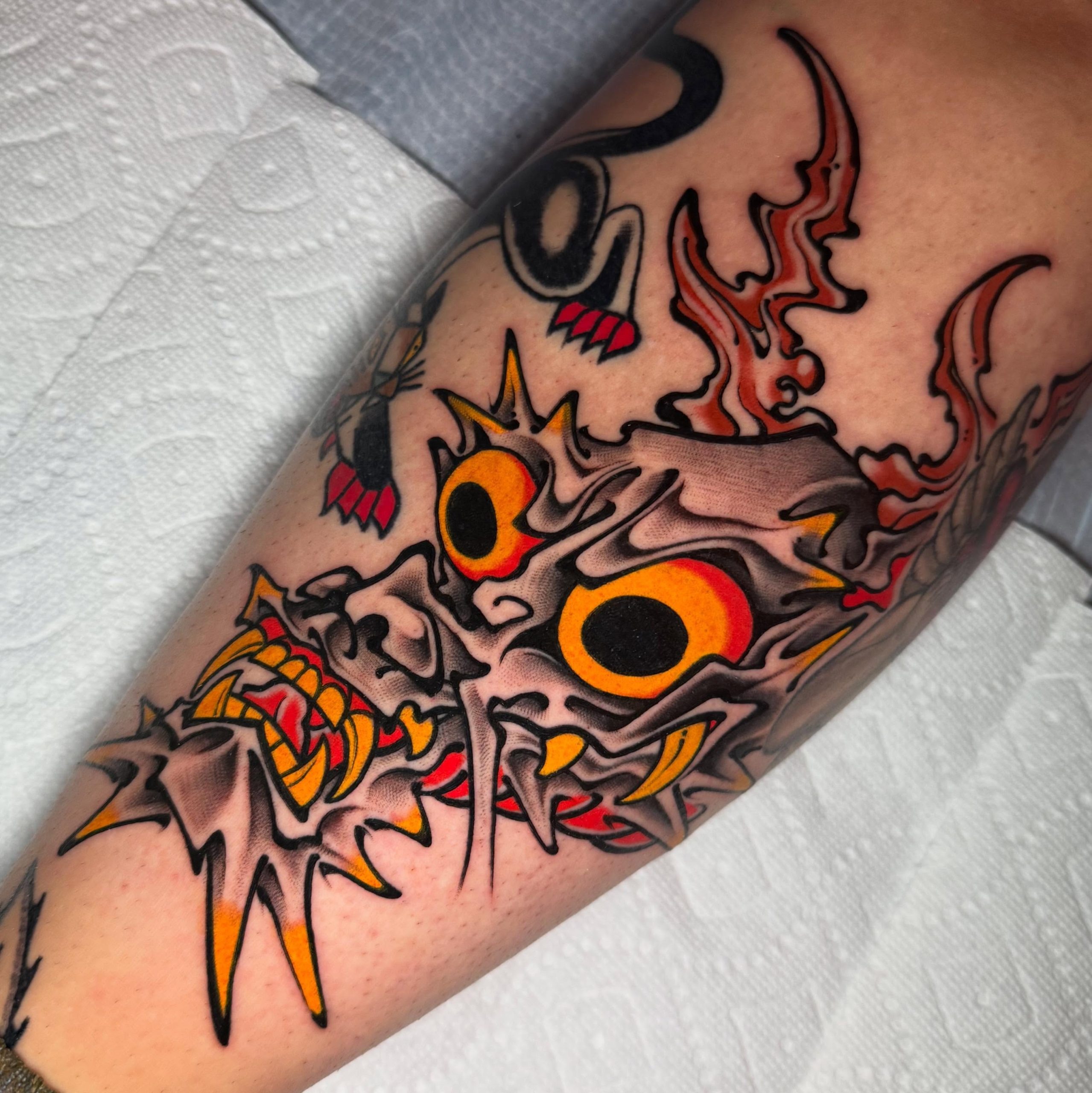
Small background details keep the leg piece connected without crowding the main image. It works well for someone drawn to bold folklore, protection, and dramatic contrast.
4. Namakubi Warrior Head Traditional Japanese Tattoo
This traditional Japanese tattoo shows a fierce blue oni mask with long horns, heavy brows, and sharp teeth. Dark cloud shapes sit above the head, while red flames rise below and add strong movement. The blue shading gives the face a cold, intimidating look, and the red accents sharpen the expression around the mouth and eyes.
5. Black Panther and Peony Traditional Japanese Tattoo
Black and Gray Dragon Traditional Japanese Tattoo
6. Dragon and Tiger Back Traditional Japanese Tattoo
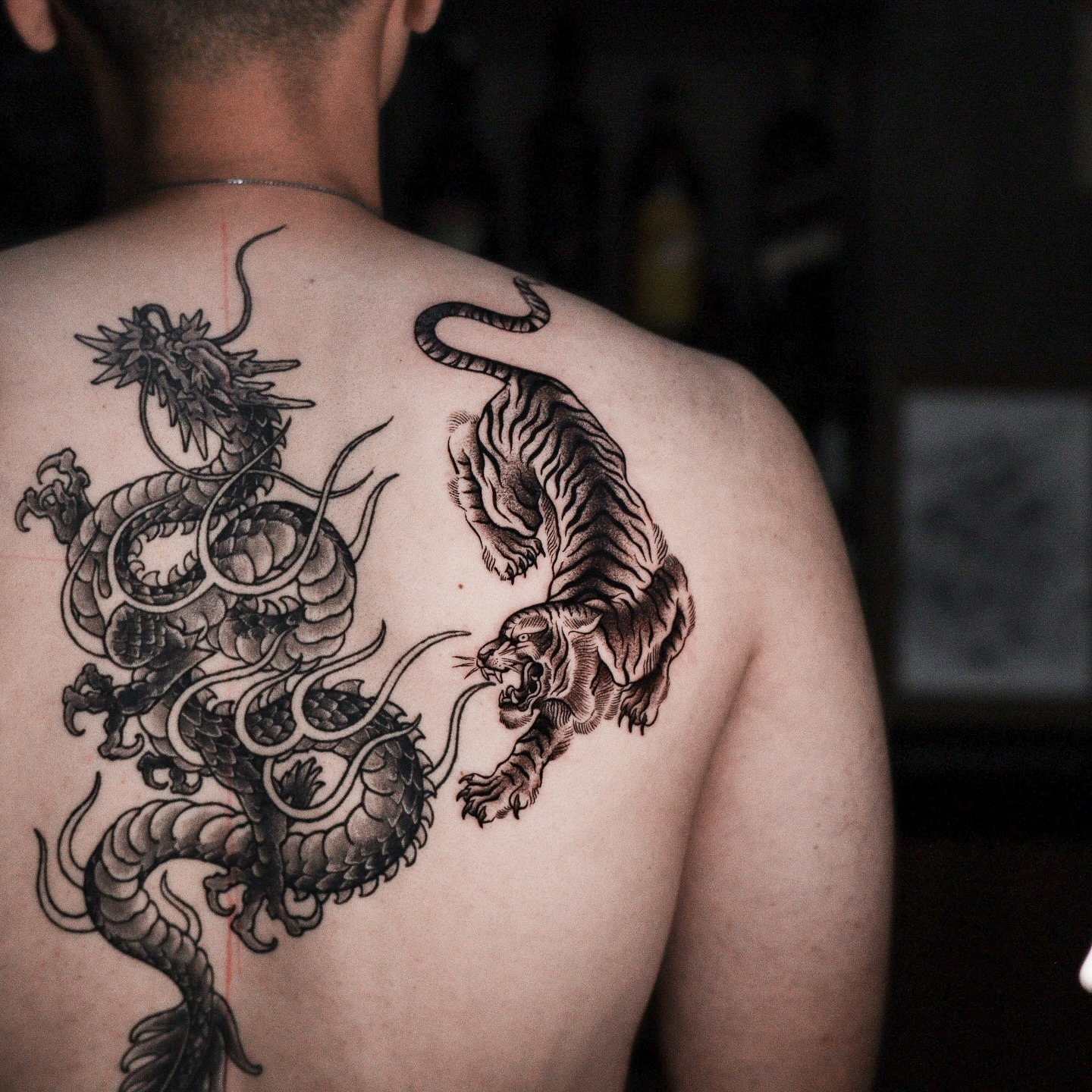
Scaled sections, shaded waves, and cloud shapes build a strong background around the main figure. The unfinished areas also show how the piece will gain more depth with future shading. It suits someone who wants a classic dragon tattoo with strength, motion, and a darker traditional style.
7. Japanese Castle and Green Cloud Traditional Japanese Tattoo
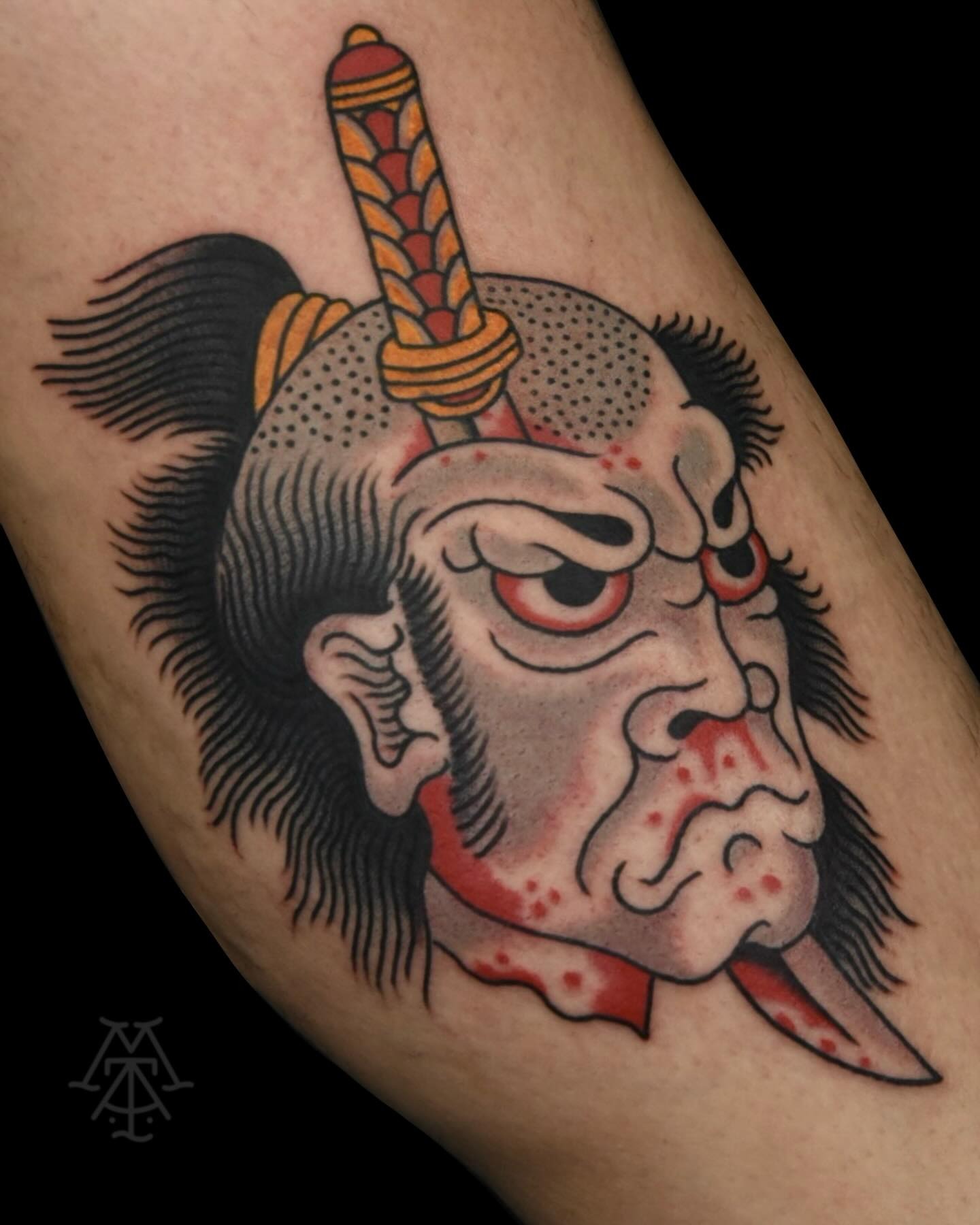
This traditional Japanese tattoo shows a namakubi-inspired warrior head with a patterned handle rising above it and a blade detail near the mouth. Heavy black hair, red eyes, and gray shading create a stern expression without overcrowding the design.
8. Coiled Snake and Chrysanthemum Traditional Japanese Tattoo
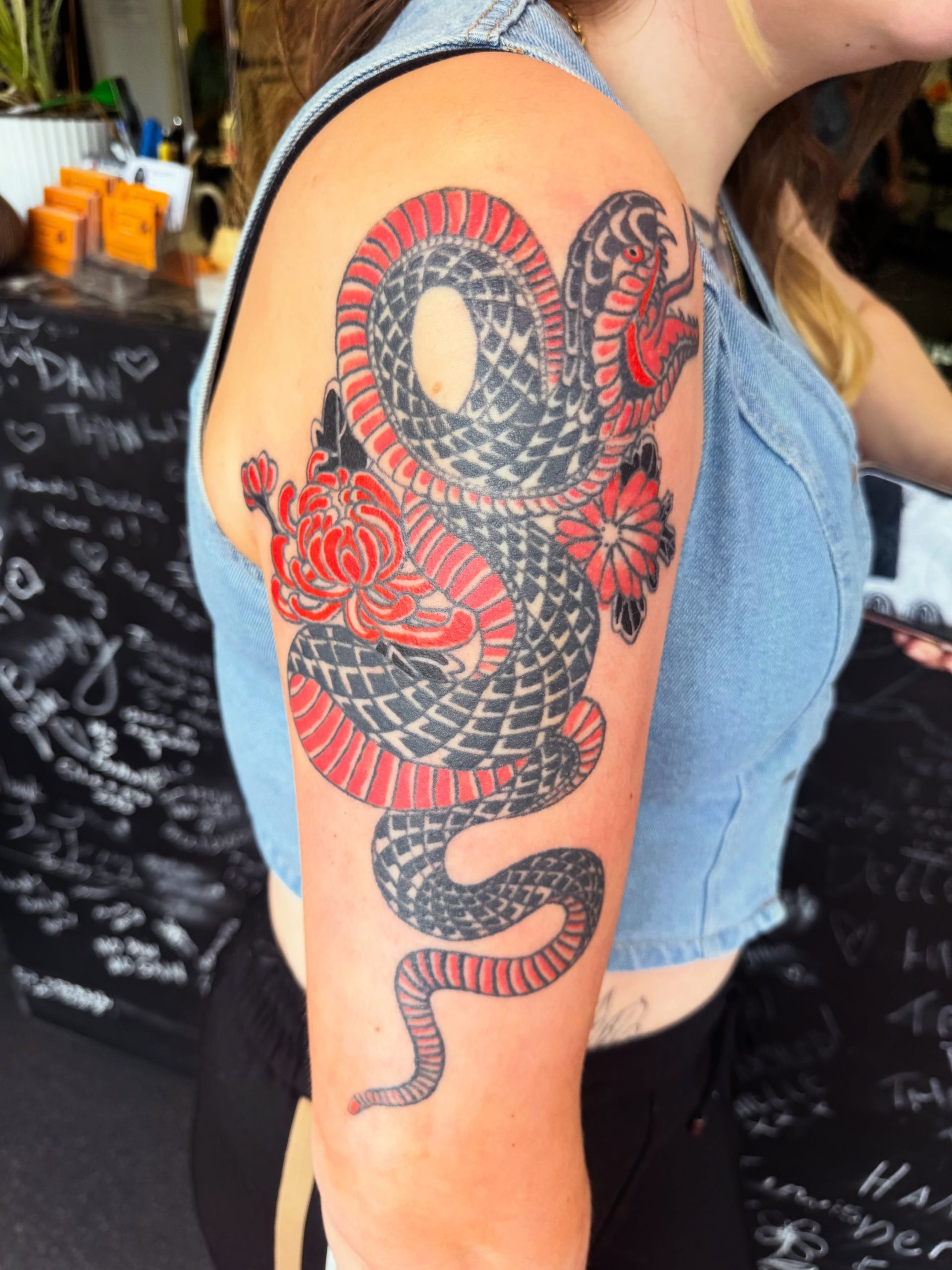
This traditional Japanese tattoo shows a black and gray dragon wrapping around the forearm with bold movement. The dragon’s open mouth, wide eyes, horns, and sharp claws create a fierce look without needing heavy color.
9. Kitsune Mask and Skull Sleeve Traditional Japanese Tattoo
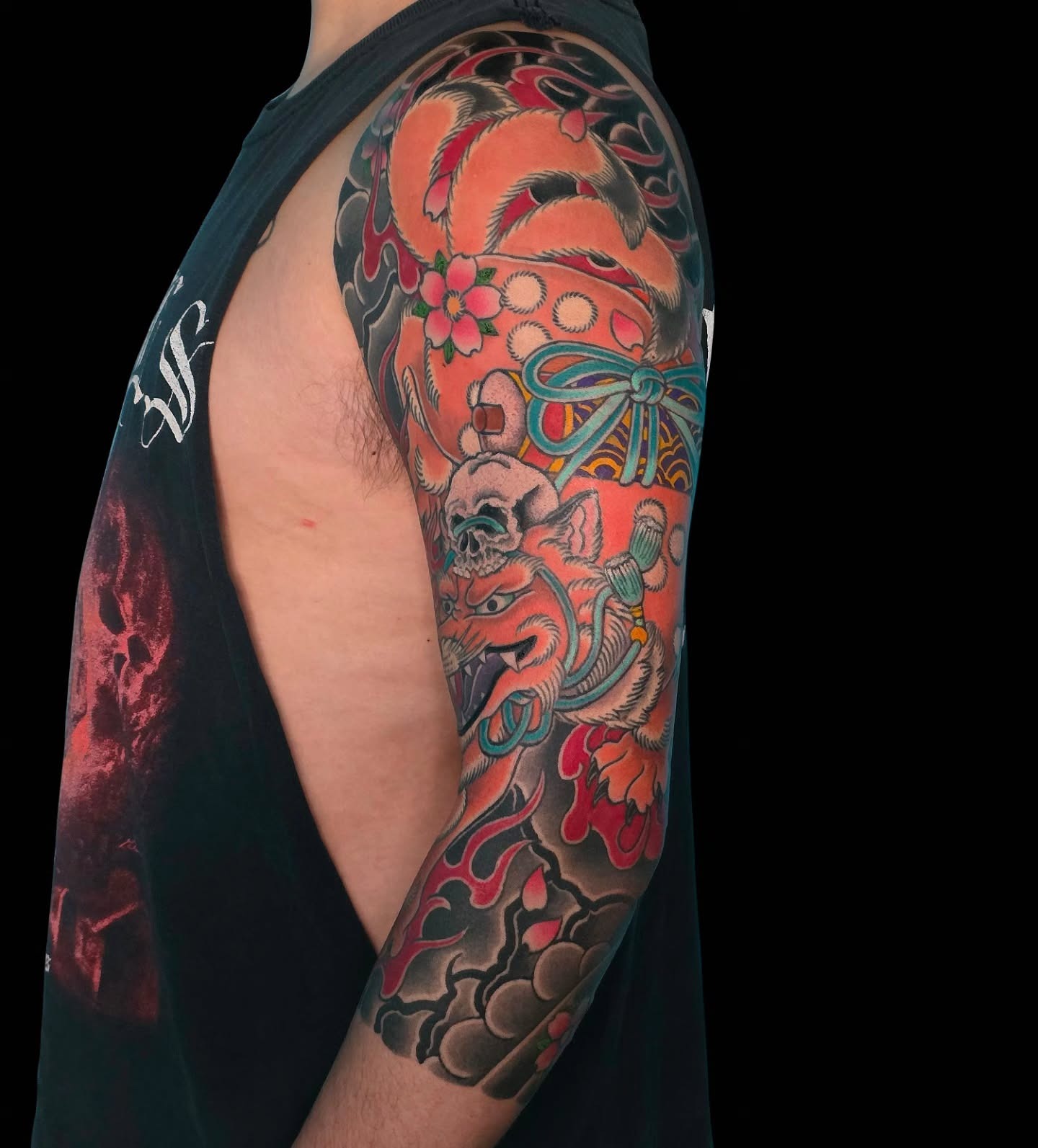
Namakubi Warrior Head Traditional Japanese Tattoo
10. Hannya Mask and Wave Sleeve Traditional Japanese Tattoo
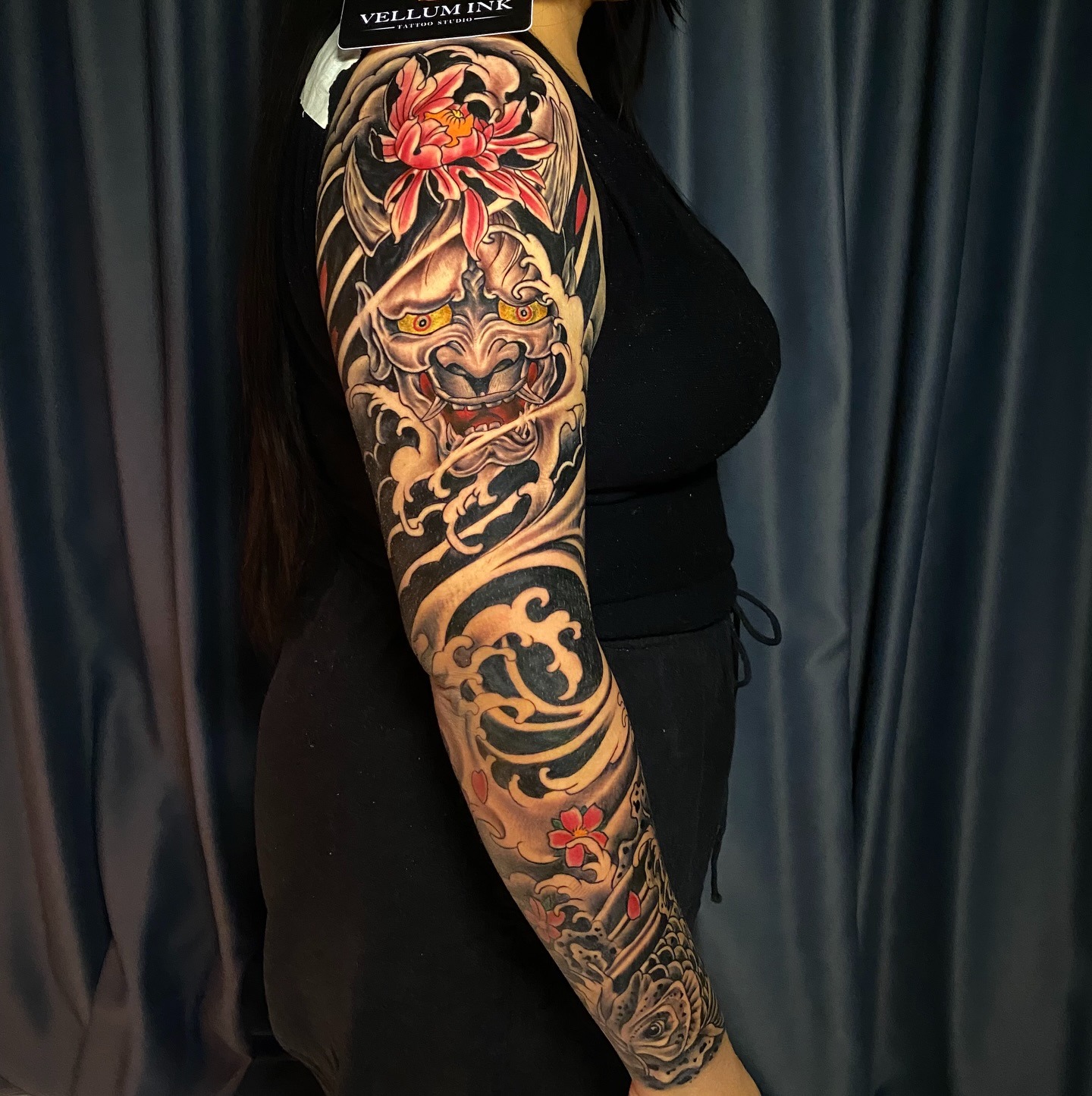
Small red accents add intensity across the face, while the clean linework keeps each feature clear. The rounded placement helps the image sit smoothly on the leg. It suits someone who wants a bold Japanese tattoo with folklore, conflict, and old-school impact.
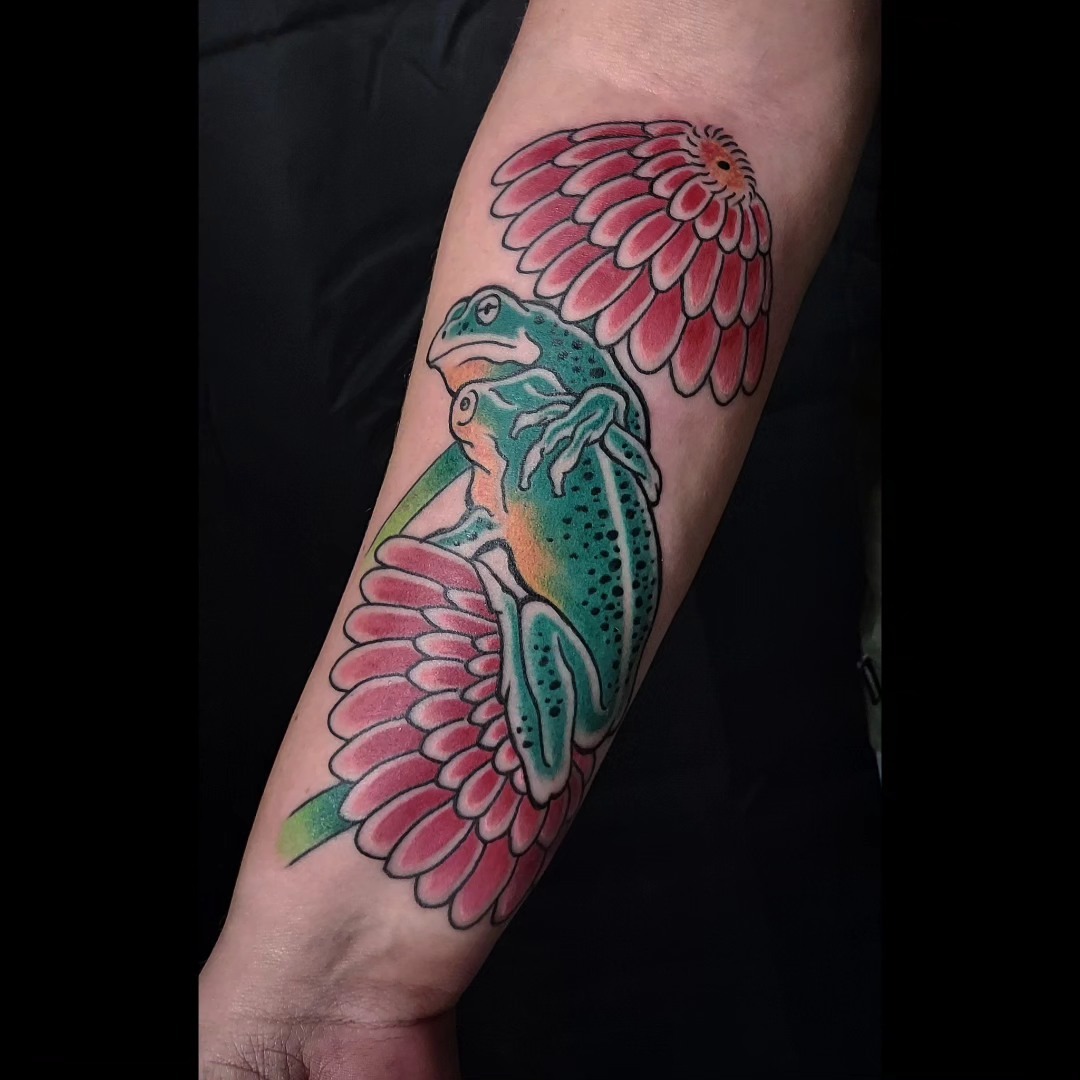
11. Two Frogs and Chrysanthemum Traditional Japanese Tattoo
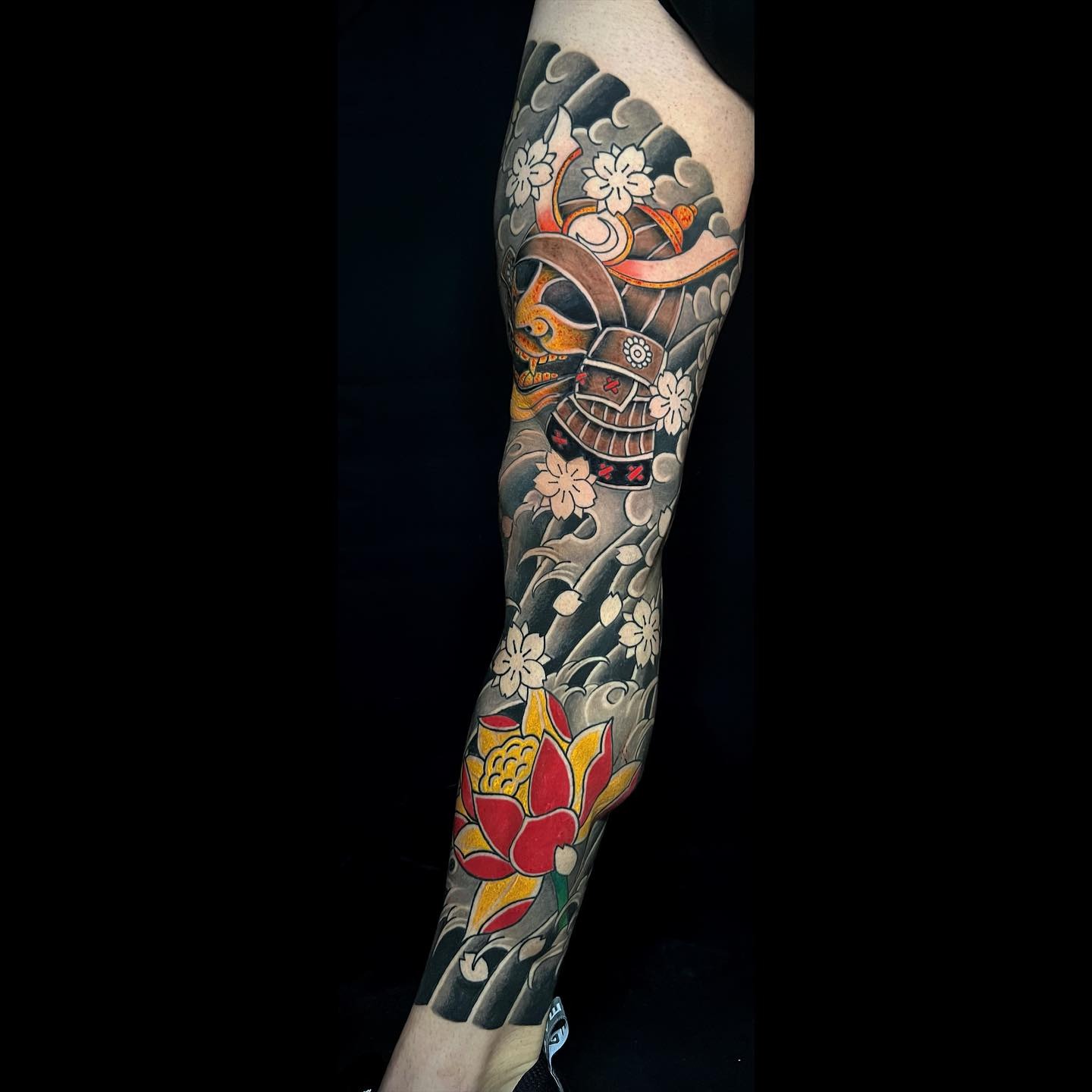
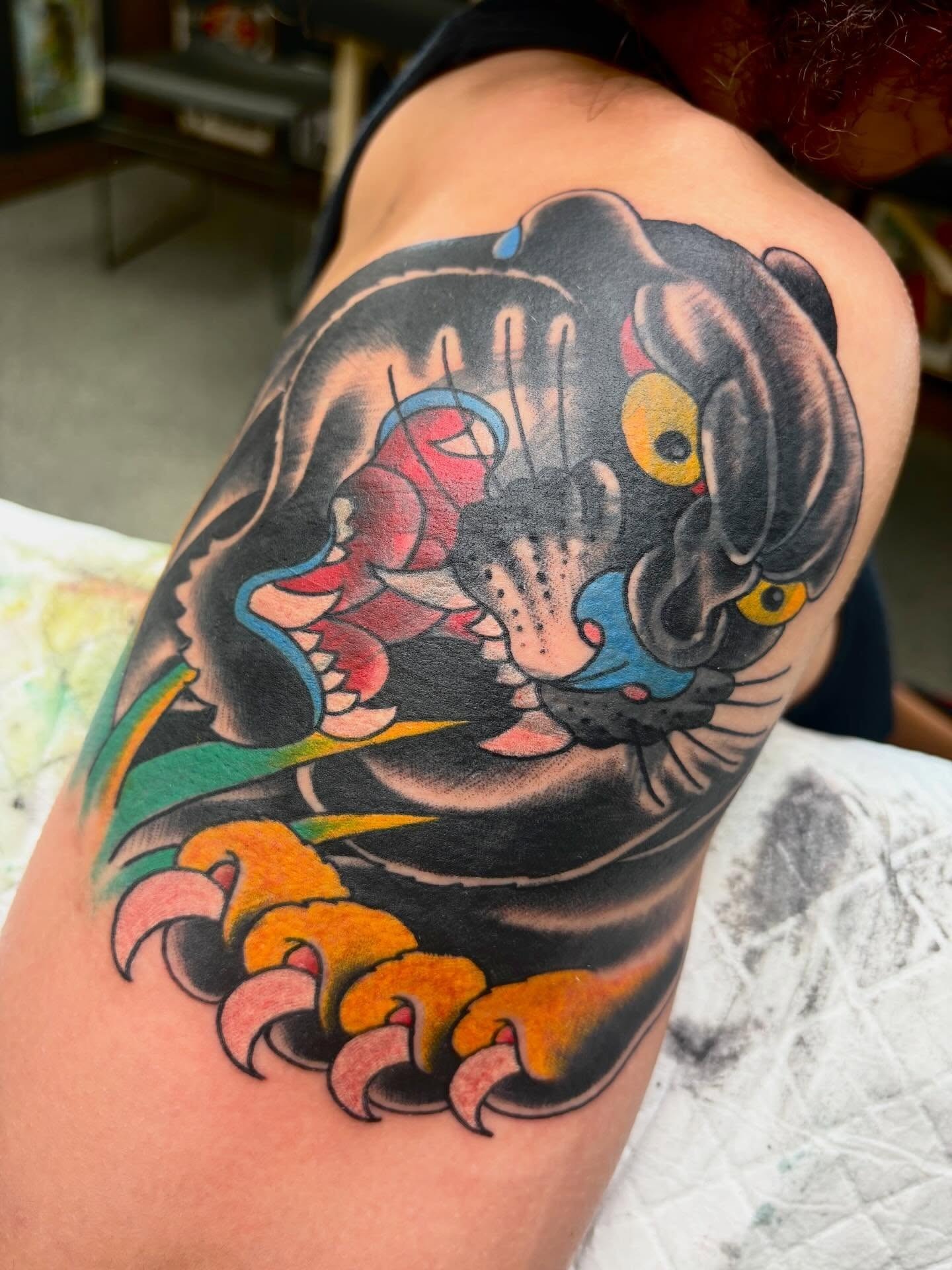
Black Panther and Peony Traditional Japanese Tattoo
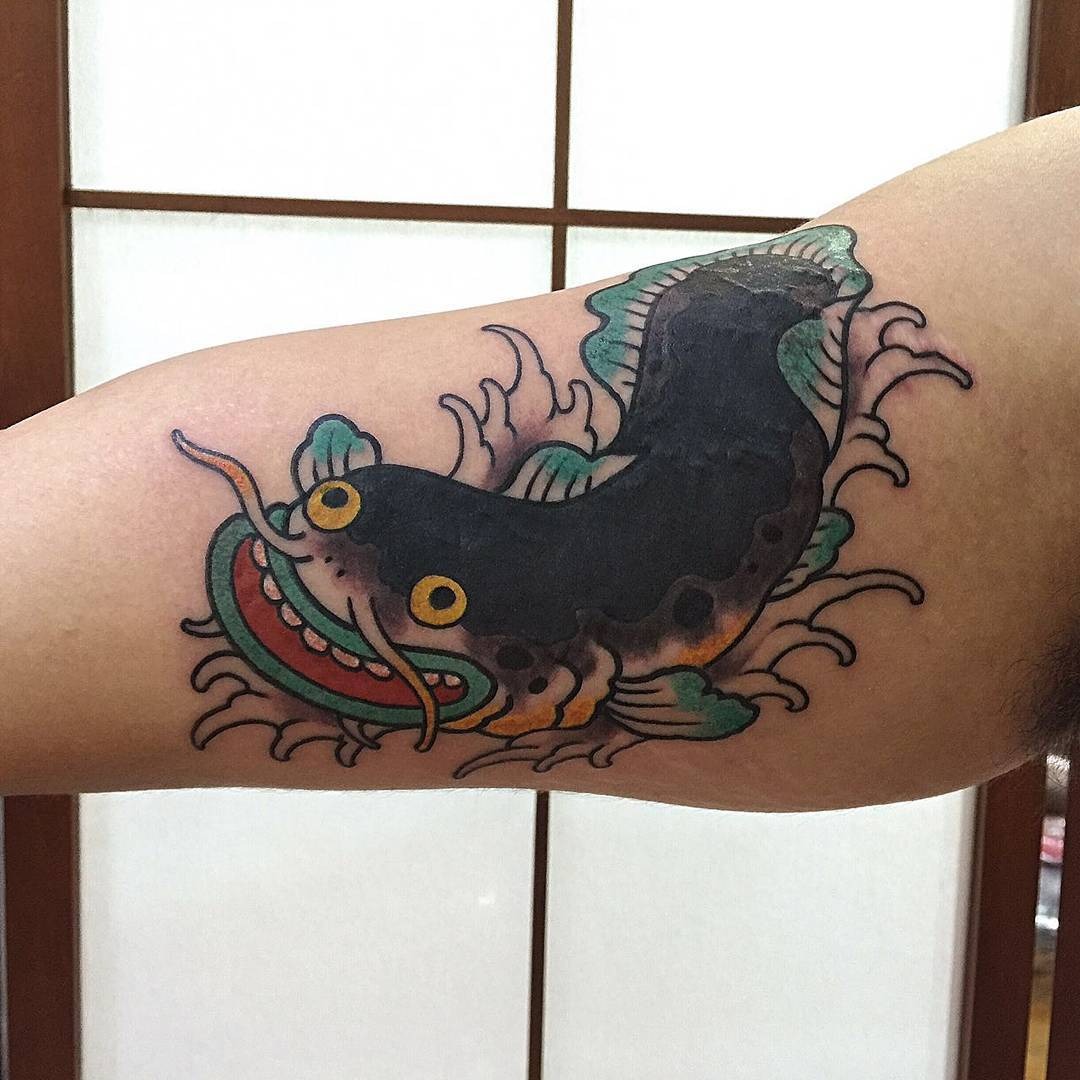
12. Namazu Catfish and Water Traditional Japanese Tattoo
Dragon Skull and Flames Traditional Japanese Tattoo
13. Japanese Woman With Staff Traditional Japanese Tattoo
This traditional Japanese tattoo shows a black panther head curled around a bright peony and claw details. Deep black shading gives the animal a heavy, protective presence, while yellow eyes pull attention toward the face.
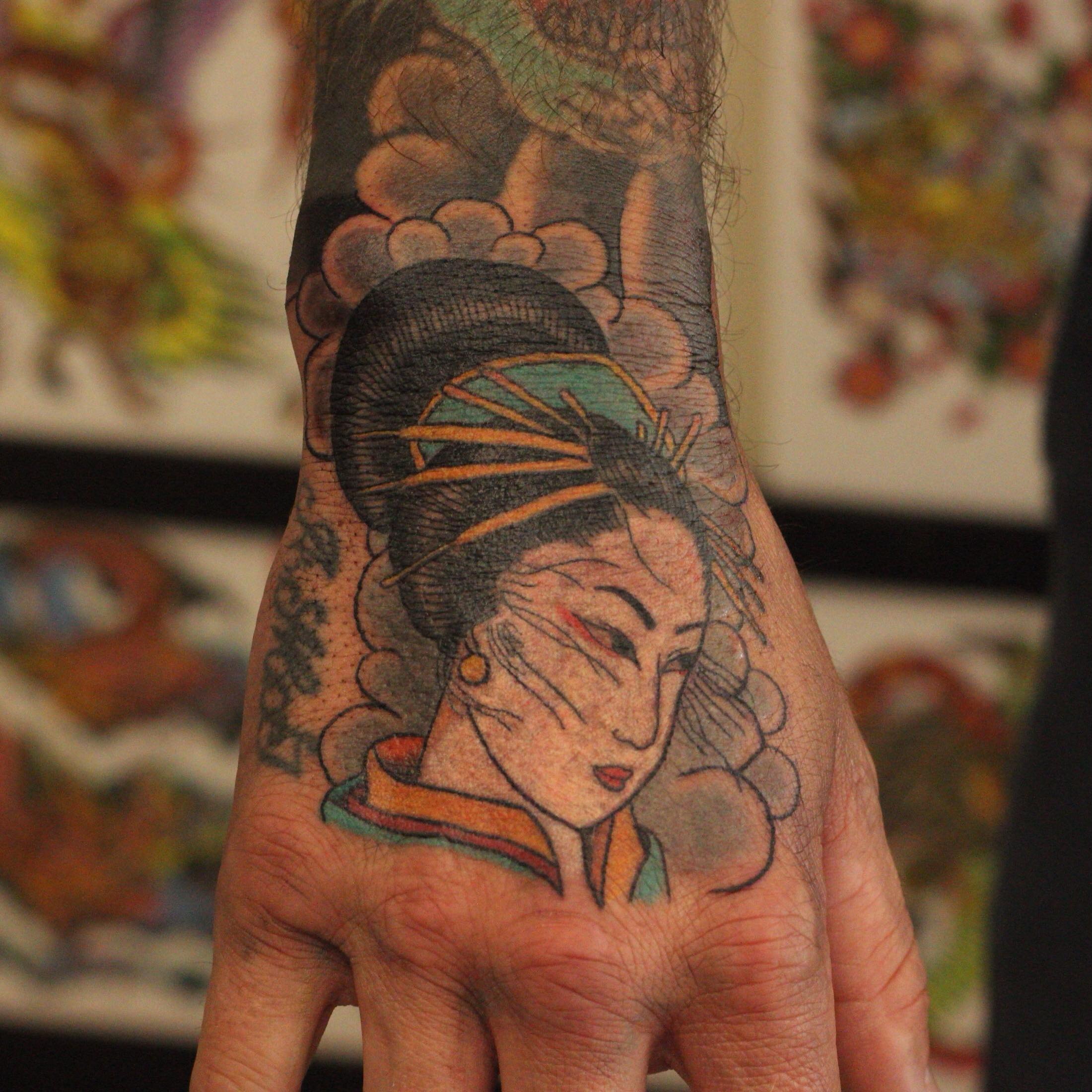
14. Geisha Portrait and Cloud Traditional Japanese Tattoo
This traditional Japanese tattoo shows a fierce dragon skull with glowing yellow eyes, sharp teeth, and sweeping horns. Gray shading shapes the bone structure, while thick black outlines give the design a strong traditional look.
Styling Advice and Placement Considerations
When selecting a tattoo design, consider how the natural contours of your body interact with the composition. Fine line and minimalist designs thrive on flat planes such as the inner forearm, ribcage, or ankle, while bold illustrative pieces command attention across broader muscle groups like the shoulder, thigh, or upper back.
Frequently Asked Questions
How long does a tattoo take to heal?
Most tattoos heal on the surface within 2 to 3 weeks, while complete deeper skin regeneration takes approximately 4 to 6 weeks. Follow strict aftercare: keep the tattoo clean, moisturized, and protected from direct sunlight.
How do I choose between color and black-and-grey?
Black-and-grey tattoos age exceptionally well and require minimal touch-ups. Color tattoos provide vibrant contrast and personality, but require consistent sun protection to prevent premature fading.
Reader Discussion
0 Comments